


The 14th National Congress (19-25 Jan) is not ceremonial: it will lock in Vietnam’s leader for the next five years, set a 10 % GDP growth target, and test “Bamboo Diplomacy” against Trump-era tariffs.
What Actually Happens Inside the National Convention Center
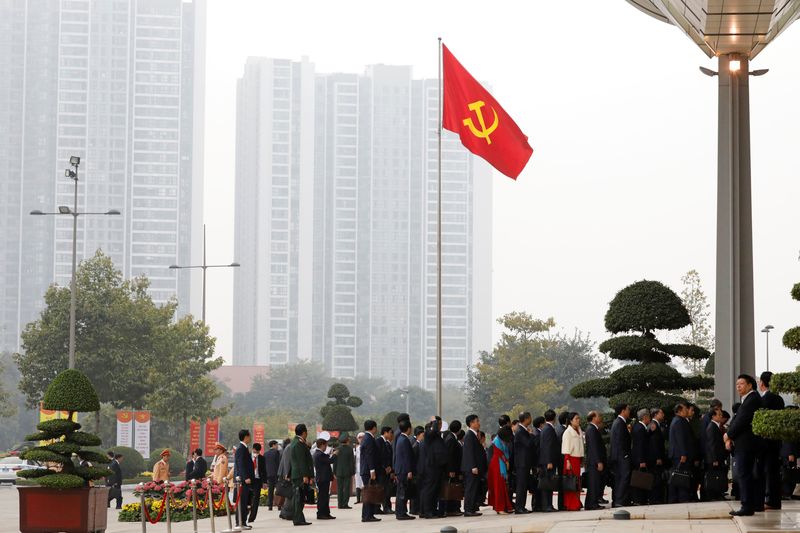
Vietnam’s constitution says the Communist Party is the “leading force,” so the congress is the only election that counts. Roughly 1,600 hand-picked delegates—representing 5.2 million members—arrive with color-coded badges that decide whether they can speak, vote or merely observe.
Over seven days they will:
- Approve a 40-page political report that becomes national law.
- Choose a 200-seat Central Committee—Vietnam’s de-facto electoral college.
- Watch the Central Committee vote twice: first for a 17-19 member Politburo, then for the General Secretary, the single most powerful post.
Only after that sequence does the Politburo nominate the president, prime minister and National Assembly chair; the rubber-stamp legislature must confirm them within weeks.
Why To Lam’s Seat Is Not Yet Guaranteed
State media in December signalled that incumbent To Lam, 68, received a “first nod,” but party rules allow delegates to reject any name. Lam’s rivals come from two blocs:
- Technocrats: Deputy PM Lê Minh Khái and Hanoi Party chief Đinh Tiến Dũng back faster market opening to hit the 10 % growth target.
- Security Conservatives: They want Lam’s police-heavy governance style to continue, fearing social unrest if growth slows.
The deciding factor is age. A 2022 term-limit guideline urges leaders over 65 to step aside unless an “exceptional situation” is declared. Lam needs two-thirds of delegates to sign a waiver—far from automatic.
10 % Growth Promise: Economics or Politics?
The draft platform targets minimum 10 % annual GDP growth for 2026-30, up from a missed 6.5-7 % goal in 2021-25. To get there, planners want to lift the budget deficit to 5 % of GDP, channeling record borrowing into highways, metro lines and two new semiconductor hubs north of Hanoi.
Yet Vietnam’s top export market, the United States, is preparing retaliatory tariffs after labeling Hanoi a “currency manipulator” in 2025. A 25 % levy on textiles and electronics could erase 1.5 percentage points of GDP growth, according to Reuters calculations.
Delegates must therefore decide whether the 10 % figure is a serious economic forecast or a political signal to domestic investors that the Party still delivers prosperity.
The End of “Bamboo Diplomacy”?
Coined by former leader Nguyễn Phú Trọng, “Bamboo Diplomacy” meant bending with the prevailing wind—China’s Belt and Road, America’s Indo-Pacific, Russia’s arms sales—without breaking. Lam has stopped repeating the slogan while keeping the balance:
- Upgraded the U.S. to a “comprehensive strategic partnership” in 2023.
- Simultaneously hosted China’s Li Qiang for a rail-project signing days later.
No candidate has proposed abandoning this tightrope, but a younger, U.S.-educated Politburo could edge closer to Washington to protect the 100 billion USD in two-way trade.
Historical Echo: 1986 All Over Again?
The congress evokes memories of the 1986 6th Party Congress that launched Đổi Mới, shifting from collective farms to market prices. Growth rocketed from 2 % to 8 % within a decade. Today’s choice is narrower—no one advocates returning to central planning—but the scale of infrastructure spending and the openness to private “national champions” could still pivot Vietnam onto a higher growth path or trap it in debt-fuelled state projects.
What Investors Watch First
Markets will parse three signals before the closing gavel on 25 January:
- Personnel: If Lam secures the waiver, expect continuity; if a technocrat wins, watch for faster equitisation of state-owned giants like Viettel and EVN.
- Language: Inclusion of “private sector as primary driver” in the final resolution would mark an ideological shift.
- Deficit: A formal 5 % cap gives ministries a green light to issue record sovereign bonds, widening the yield spread on Vietnam’s dollar debt.
A surprise upset is unlikely—the Party prizes stability—but even marginal changes in wording or leadership age will ripple through Southeast Asia’s fastest-growing economy for the next half-decade.
Stay ahead of every policy twist and market flashpoint—bookmark onlytrustedinfo.com for the fastest, most authoritative analysis on Vietnam and the wider Indo-Pacific.


