


Sixteen skaters, three medal favorites, one quad Axel: the deepest U.S. figure skating team since 2002 heads to Milano with legitimate podium chances in every discipline.
ST. LOUIS — U.S. Figure Skating unveiled a 16-skater Olympic roster Monday night, the largest contingent the United States has ever sent to a Winter Games and the first since 2002 that owns a podium-level chance in every single discipline. Headlining the squad is 21-year-old Ilia Malinin, the reigning two-time world champion who has not lost an event since December 2023 and enters Italy as the clearest gold-medal favorite on the planet.
The announcement came minutes after the free dance concluded at the 2026 U.S. Figure Skating Championships, capping four days of competition that doubled as the lone Olympic qualifier. The math is brutal: only the top three in each discipline plus the top two ice-dance and pairs teams secure spots, leaving perennial national medalists on the outside looking in.
Why this team is different
Since the 2022 Beijing Games, American skaters have collected just one Olympic medal — Nathan Chen’s gold in the men’s event. The 2026 roster flips that script overnight:
- Three reigning world champions: Malinin (men), Alysa Liu (women), Chock/Bates (ice dance).
- Three athletes who own quadruple jumps in competition: Malinin (quad Axel), Liu (quad lutz), Glenn (quad toe).
- Two pairs teams ranked inside the global top eight in ISU season standings.
Translation: the U.S. is no longer chasing the podium — it’s defending favorite status in three of the five events.

The podium favorites
Men’s singles: Ilia Malinin
Age: 21 | Hometown: Vienna, Virginia | Olympic experience: rookie
Malinin is the only human to land a quadruple Axel in international competition, a jump worth 15.0 base points that no rival even attempts. He has swept every event since the 2023 Grand Prix Final, winning by an average margin of 17.4 points — essentially a full quadruple jump cushion. Expect him to open the Games with a 10-point lead after the short program and never look back.
Women’s singles: Alysa Liu
Age: 20 | Hometown: Oakland, California | Olympic experience: 2022 alum
Liu un-retired in 2024 and promptly won the 2025 world title, becoming the first American woman to claim gold since 2015. She lands two quads in her free skate and owns the highest technical score on the planet this season. A clean skate makes her the favorite over Japan’s Kaori Sakamoto and South Korea’s Kim Ye-lim.
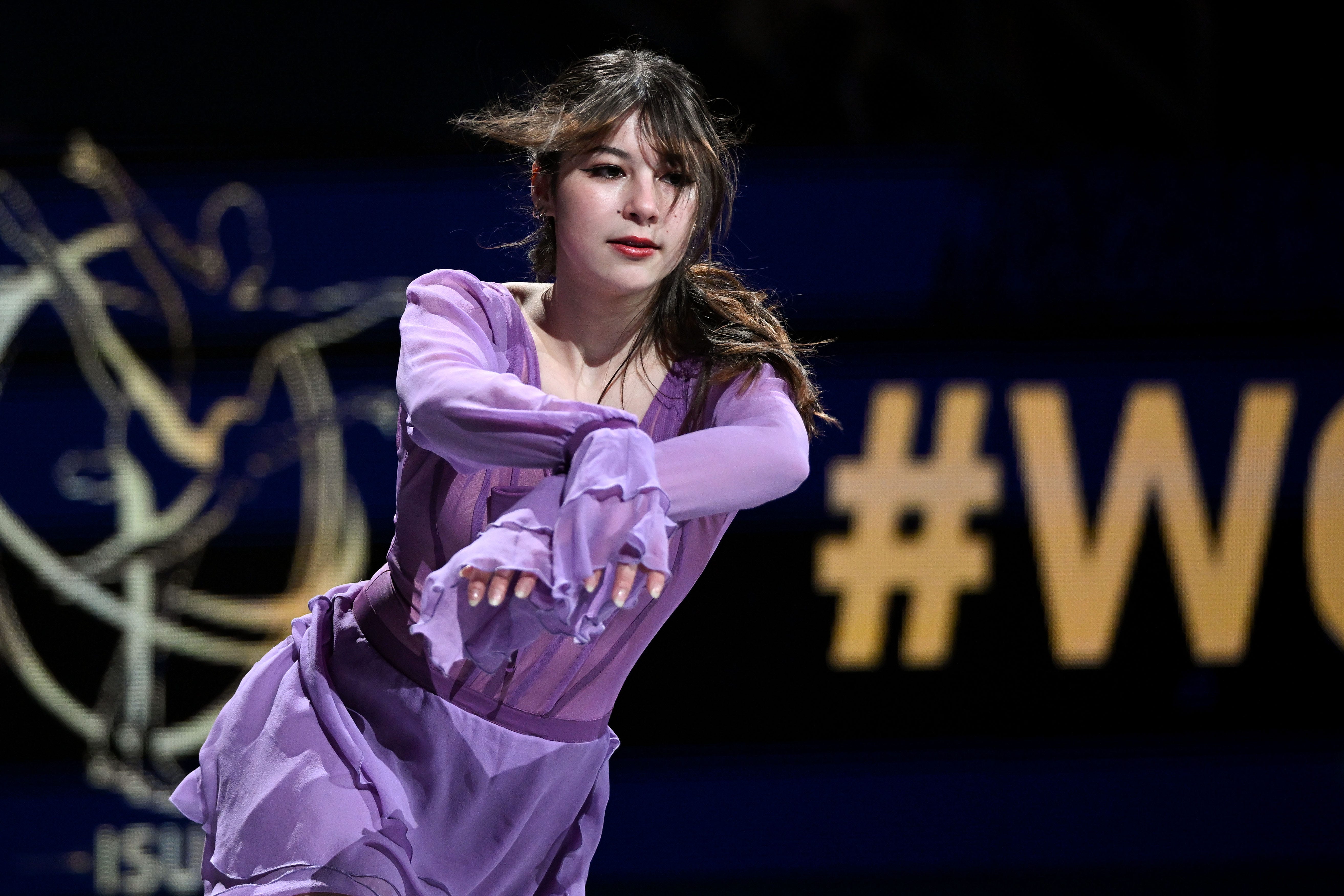
Ice dance: Madison Chock & Evan Bates
Ages: 33 & 36 | Hometowns: Redondo Beach, Calif. & Ann Arbor, Mich. | Olympic experience: fourth Games
The married couple enters Milano on a three-year unbeaten streak that includes three world titles and five straight national crowns. Their rhythm dance score this season (91.25) is a world record, and their free dance is a dramatic retelling of their 17-year partnership that routinely brings judges to tears. A podium finish would make them the oldest ice-dance medalists in Olympic history.
The sleeper threats
Women’s singles: Amber Glenn
Glenn is the only woman to beat Liu this cycle, doing so at December’s Grand Prix Final. She opens her free skate with a quad toe loop and closes with a triple lutz-triple loop combination that outscores most rivals’ quad attempts. A mental-health advocate who speaks openly about therapy, she skates with a freedom that could vault her onto the podium if leaders falter.
Women’s singles: Isabeau Levito
At 18, Levito is the youngest U.S. woman to make an Olympic team since Liu in 2022. She doesn’t have a quad, but her component scores — think artistry — trail only Sakamoto globally. skating second-to-last in the free skate, she could ride Italian crowd energy to the skate of her life and squeeze onto the podium with a 150-point effort.

Pairs: Katie McBeath & Daniil Parkman
They posted a personal-best 213.98 at December’s Grand Prix Final, a score that would have won bronze at the 2022 Olympics. Their side-by-side triple salchows are the most consistent in the field, and their throw triple loop travels so far it often lands past the opposite blue line. A top-four finish is realistic; a medal is possible if the Chinese and Japanese leaders make errors.
Stories you’ll remember in Milano
Maxim Naumov: skating through tragedy
Naumov’s parents were among the 67 people killed in the January 2025 Potomac plane crash. He considered withdrawing but instead dedicated his season to them, winning bronze at nationals with a free skate that ended with him pointing skyward. Expect every jump to land amid a thunderous ovation.
Christina Carreira: daily border crossings
The 25-year-old ice dancer obtained U.S. citizenship only in November. Until then, she and partner Anthony Ponomarenko drove across the Windsor-Detroit border every day for practice because she trained in Canada while living in Michigan. Their Olympic selection is a payoff four years in the making.
Spencer Akira Howe: soldier on ice
Howe enlisted in the U.S. Army in 2024 and balances active-duty requirements with training. He flies in on weekends, sometimes landing at the rink in uniform. His presence gives the pairs event a red-white-and-blue narrative that extends beyond the ice.

How the team was chosen
U.S. Figure Skating uses a weighted matrix that combines nationals results with international scores from the past 18 months. That formula elevated Emily Chan & Spencer Akira Howe into the third pairs slot over teams that finished higher in St. Louis, and nudged Ellie Kam & Daniel O’Shea ahead of younger pairs with flashier nationals skates but weaker global data.
The 16-skater total breaks down as:
- 3 men (Malinin, Torgashev, Naumov)
- 3 women (Liu, Glenn, Levito)
- 3 pairs (Kam/O’Shea, Chan/Howe, McBeath/Parkman)
- 3 ice-dance couples (Chock/Bates, Carreira/Ponomarenko, Zingas/Kolesnik)
Alternates in each discipline travel to Milano and can be subbed in up to 24 hours before competition starts.

Historical context: why 2002 matters
The last time the U.S. entered an Olympics with this much firepower was Salt Lake City 2002, when Sarah Hughes, Michelle Kwan, Timothy Goebel, and the pairs team of Sale & Pelletier combined for three medals. That squad is remembered as the standard-bearer for American depth; this roster matches it on paper and surpasses it in technical difficulty thanks to the quad revolution Malinin and Liu represent.
Medal projections from global analytics models currently forecast 2.8 medals for the U.S. in figure skating, the highest number since those 2002 Games. Anything less than two will be viewed as underachievement; three or more would stamp Milano as the new golden era.
What to watch when the lights go on
- Men’s short program, Feb. 10: Malinin’s quad Axel attempt in the second-to-last group. If he lands it, the competition is effectively over.
- Women’s free skate, Feb. 12: Liu vs. Glenn vs. Sakamoto in a battle that could come down to triple-triple combinations under ferocious Italian crowd noise.
- Ice dance free dance, Feb. 14: Chock/Bates’ cinematic program that ends with them skating into each other’s arms — a moment designed to melt scores and hearts.
- Pairs free skate, Feb. 15: McBeath/Parkman’s throw triple loop that travels 20 feet. Land it clean and they’re in medal position.
With 16 athletes, three world titles, and more quadruple jumps than any nation has ever brought to a Games, the U.S. isn’t just hoping for hardware in Milano — it’s planning a parade. Follow every twist, jump, and kiss-and-cry moment with our fastest, most authoritative Olympic coverage only at onlytrustedinfo.com.

