


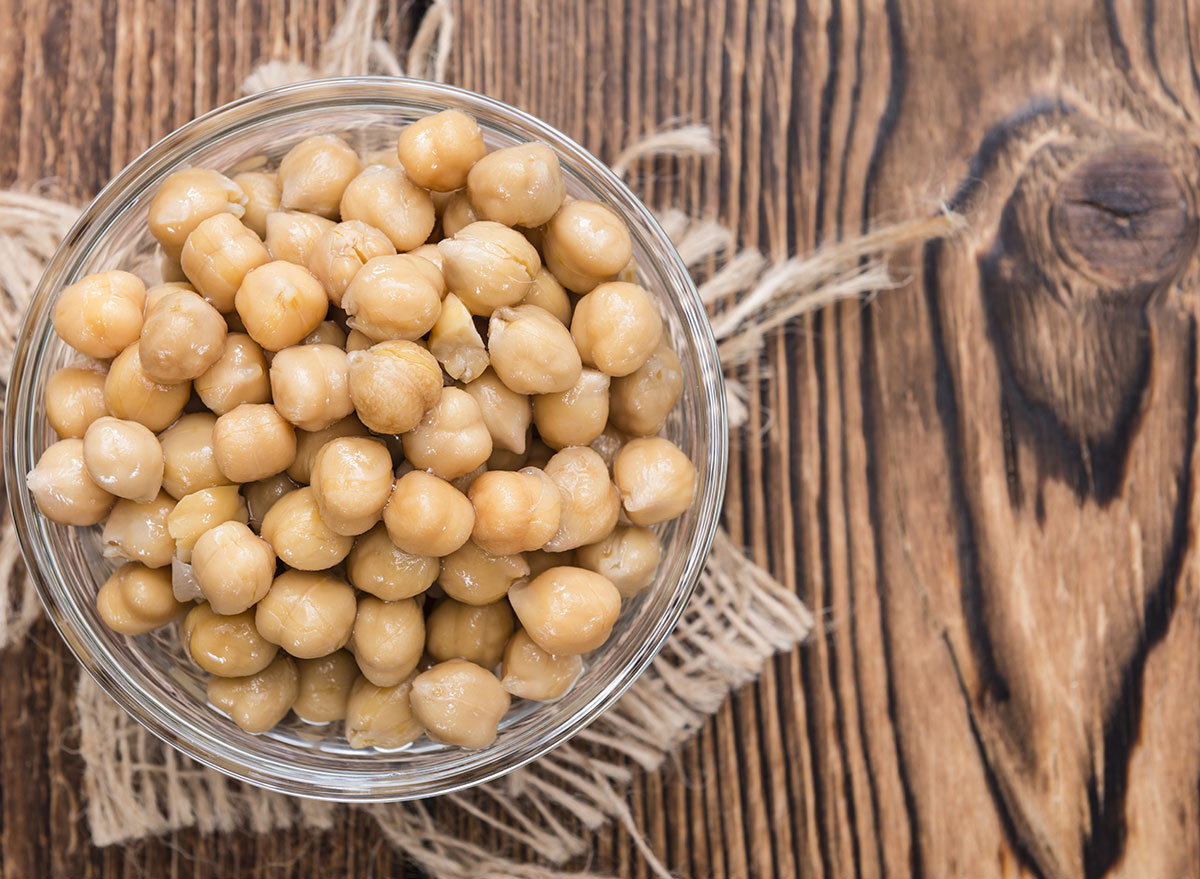
If you’re a vegetarian or try to eat plant-based most of the time, you’re likely familiar with chickpeas. This high-protein legume is part of the bean family and is a tasty component of hummus, falafel, salads, and plant-based sandwich recipes. They’re tasty, easy to use, convenient when canned, and affordable, making them a popular choice in many parts of the world. There are many benefits to eating this legume, but when it comes to nutrition, are chickpeas actually good for you?
The short answer is that, yes, for most people, chickpeas can be a nutritious addition to your balanced diet. In this article, we explore the benefits and potential side effects of eating chickpeas.
Chickpeas Nutrition
In just one cup, chickpeas offer your body almost 15 grams of protein, over 12 grams of fiber, 4 grams of fat, and only 270 calories. In short, they’re a powerhouse of nutrients. According to USDA FoodData Central, one cup of cooked chickpeas has:
Calories: 269
Fat: 4 g (Saturated Fat: <1 g)
Sodium: 11.5 mg
Carbs: 45 g (Fiber: 12.5 g, Sugar: 8 g)
Protein: 14.5 g
Read on to learn about the benefits of eating chickpeas and a few possible side effects. Then, check out 15 Best High-Fiber Recipes for Weight Loss.
5 Benefits of Eating Chickpeas
They help with digestion.
Fiber is an essential part of digestion, yet some people struggle to get enough of it every day. Luckily, chickpeas soar in this category, particularly with a high dose of soluble fiber called raffinose. This helps you digest your food more slowly since the good kind of bacteria breaks down the raffinose. Also, according to one study about chickpeas published in Nutrients, bowel movements might be more comfortable and more frequent.
They can keep you full.
One cup of cooked chickpeas has 12.5 grams of fiber and 14.5 grams of protein—two nutrients that can work together to keep you feeling full and satiated after eating.
For starters, your body takes longer to digest protein than other nutrients, so it keeps you feeling full for longer. Protein can also help reduce hunger hormones, which in turn helps reduce your appetite. Fiber can have similar effects on your hunger levels and helps to regulate your appetite by increasing satiety as well.
Chickpeas can help lower cholesterol.
For optimum vitality and energy, it’s essential to manage your cholesterol. Why is that? High cholesterol can contribute to heart disease, obesity, strokes, and other serious illnesses. Chickpeas are packed with fiber, and high-fiber foods can help lower cholesterol levels and help prevent cardiovascular disease.
They may lower your cancer risk.
Our bodies are impressive things, able to fight disease, create organs during pregnancy, and protect us against viruses, environmental factors, and more. When we feed our body nutrient-rich foods, like eating chickpeas, it’s like giving ourselves a helping hand.
In fact, when we consume chickpeas, our bodies produce butyrate, a short-chain fatty acid. One study published in the Journal of Cancer shows this fatty acid can fight sick and/or dying cells. Another study goes a step further and says this could lower our overall risk for colorectal cancer.
They give you stronger bones.
Chickpeas are packed with fiber, magnesium, and calcium, like many other legumes. These present many wonders for our body, but one of the most significant is building stronger, healthier bones.
According to a study published in Nutrients, we need adequate calcium intake for healthy bone development and maintenance, and one cup of chickpeas can provide about 6% of this daily value.
A study from the journal Bone found that magnesium can help prevent bone loss. The amazing news is that a cup of chickpeas can provide 18% of your daily value.
if( navigator.sendBeacon ) { navigator.sendBeacon('https://www.google-analytics.com/collect', payload); } else { var xhr = new XMLHttpRequest(); xhr.open('POST', 'https://www.google-analytics.com/collect', true); xhr.setRequestHeader('Content-Type', 'text/plain;charset=UTF-8'); xhr.send(payload); } } ); }
2 Possible Risks of Eating Chickpeas
You may overdo it on calories and fat.
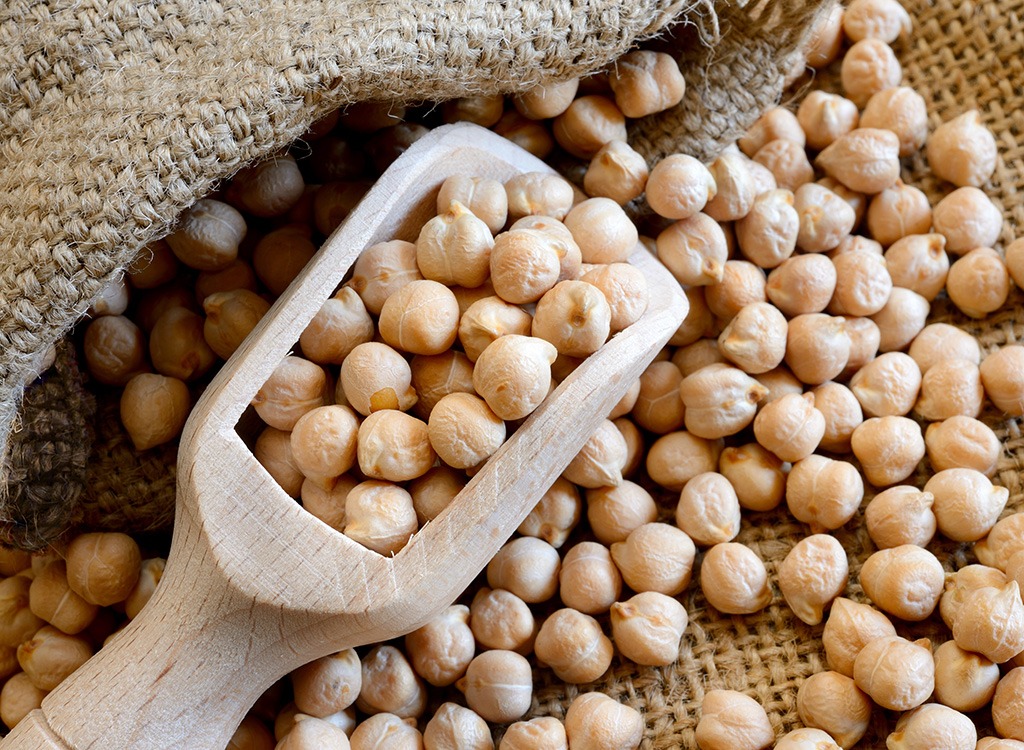
Since chickpeas are healthy, you can have as much as you’d like, right? Well, this isn’t always the case. While they are a source of protein, fiber, and many helpful nutrients, they can also be turned into snacks and meals that quickly rack up the calories and fat components. Two examples of this are hummus and falafel, both of which should be eaten in moderation because they can be high in calories and fat.
Botulism is a small possibility.
Though the risk of contracting botulism from canned goods is very low, it’s still there, according to the CDC. Botulism is common when someone cans food at home and the canning process isn’t done properly. This serious illness is rare and is caused by bacteria that disrupt the nervous system. Sometimes, according to the USDA, when canned foods aren’t stored properly, this bacteria can thrive, particularly in low-salt, low-oxygen, and low-sugar solutions, like chickpeas.

