

WindBorne Systems: How AI and a Fleet of Balloons are Revolutionizing Weather Forecasting
A startup founded by Stanford graduates is making waves in the world of weather prediction, challenging tech giants like Google and Nvidia. WindBorne Systems is using a combination of artificial intelligence and a global network of long-duration weather balloons to deliver faster, more accurate weather forecasts.
The company’s innovative approach has already attracted the attention of government agencies, including the National Oceanic and Atmospheric Administration (NOAA) and the U.S. Air Force, and it is now setting its sights on the commercial market.
The Problem with Traditional Weather Forecasting
For decades, weather prediction has relied on complex physics-based models that require massive supercomputers. While powerful, these models are often hampered by a lack of real-time data, especially over the vast expanses of the world’s oceans, where much of our weather originates. This data gap can lead to inaccuracies in forecasting, particularly for extreme weather events.
WindBorne’s Solution: A “Planetary Nervous System”
WindBorne’s solution is a two-part innovation:
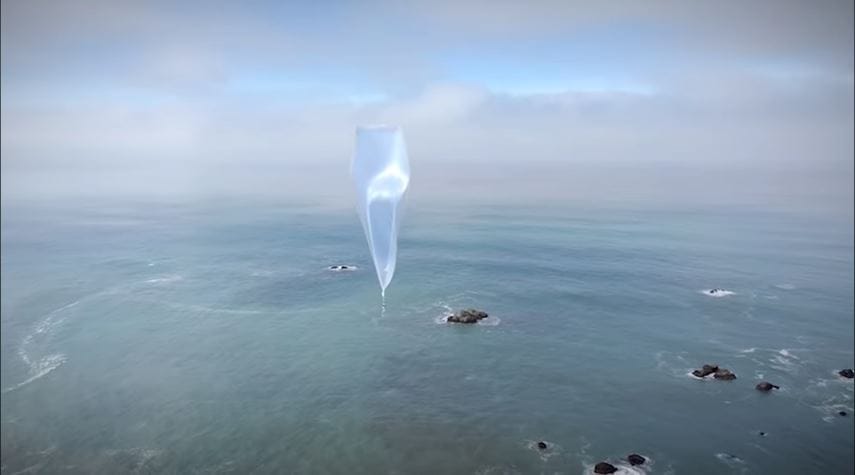
- A Global Network of Smart Balloons: Unlike traditional weather balloons that fly for only a few hours, WindBorne’s balloons can stay aloft for over 40 days. These “smart” balloons can autonomously navigate the atmosphere, collecting vast amounts of data—50 to 150 times more per dollar than traditional methods. The company aims to have a constellation of 10,000 balloons in the air by 2028, creating a “planetary nervous system” for weather data.
- WeatherMesh: A Record-Breaking AI Model: The data from the balloons is fed into WindBorne’s AI-powered forecasting model, called WeatherMesh. This model, built on a transformer-based architecture similar to that used by ChatGPT, can process vast amounts of data to generate forecasts with remarkable speed and accuracy.
Outperforming the Competition
WeatherMesh has already proven its capabilities, outperforming leading AI weather models from giants like Google’s DeepMind. The company’s forecasts are updated every 10 minutes, providing a near-real-time view of developing weather systems. This is a significant improvement over traditional models that are updated only every few hours.
The system has shown particular promise in predicting the paths of tropical cyclones and other extreme weather events, where a few hours of extra warning can make a life-or-death difference.
The Future of Weather Prediction
WindBorne’s success demonstrates the power of combining innovative hardware with cutting-edge AI. As climate change continues to fuel more extreme and unpredictable weather, the need for faster, more accurate forecasting has never been greater.
The company’s approach is not about replacing traditional weather models entirely, but about augmenting them with a new wealth of data and the power of AI. By filling the critical data gaps and leveraging the predictive power of machine learning, WindBorne Systems is not just forecasting the weather; it is helping us to better prepare for it.

