


For the first time ever, scientists say they have made a species de-extinct, bringing the dire wolf back into the world thousands of years after it died off.
Colossal Biosciences, a company based in Dallas, says it successfully birthed three dire wolves — a species that once roamed North America but has been extinct for more than 12,500 years — using revolutionary science.
Colossal CEO Ben Lamm said the team used DNA from a 13,000-year-old tooth and a 72,000-year-old skull to analyze the full genome of the species and create three healthy dire wolf puppies, according to a news release.
Colossal Biosciences 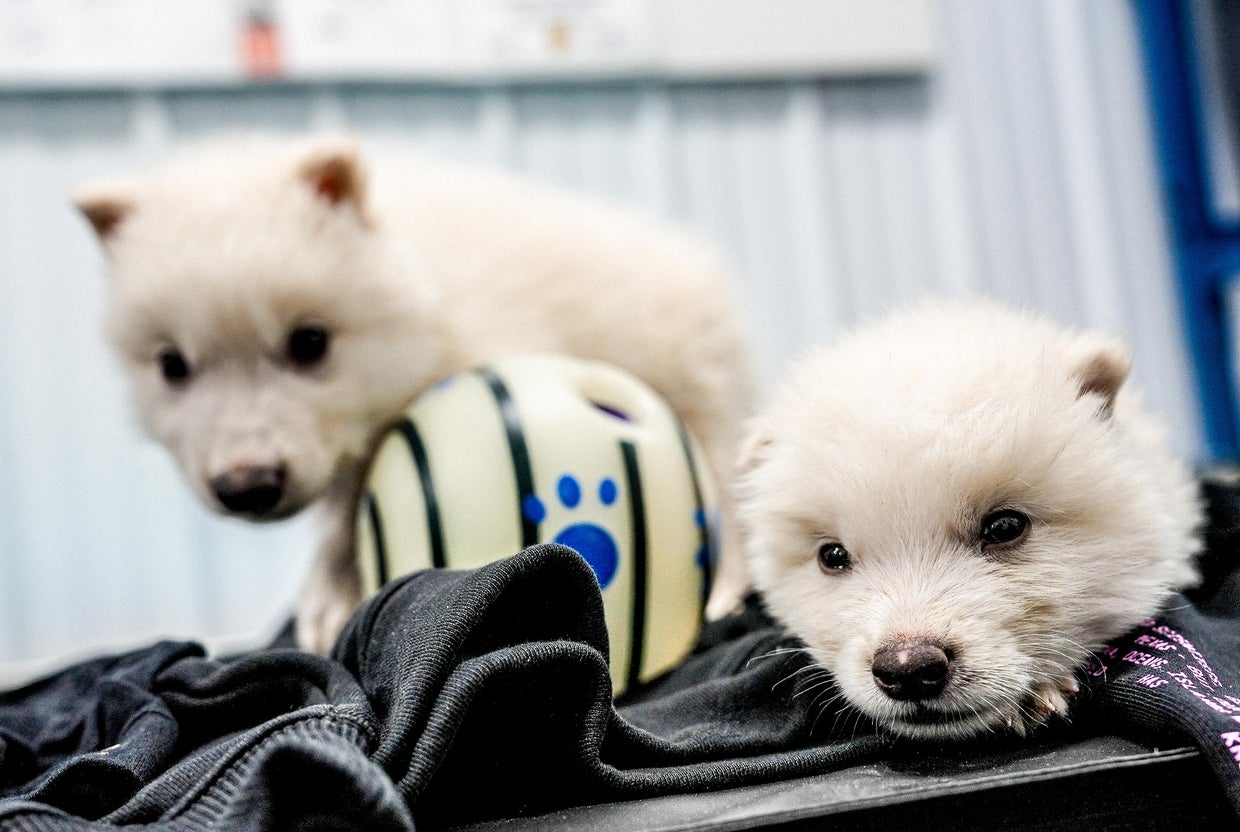
The Colossal website explains that many dire wolf fossils were preserved in the La Brea tar pits, in the Los Angeles area, but the species’ DNA was not preserved in the tar.
But using two dire wolf samples from an international study on the extinct species, Colossal was able to uncover more dire wolf DNA that ever previously found. Company scientists were eventually able to analyze the species’ genome — or its entire DNA set.
Then they used CRISPR, a gene-editing technology, to genetically modify cells from a living gray wolf. Usually, cloning relies on tissue samples, but Colossal was able to use these modified cells to create embryos, then transferred them to a surrogate (a domestic dog, The Associated Press reported) to grow.
Three litters of dire wolf puppies yielded two males, named Romulus and Remus, and a female, named Khaleesi after the “Game of Thrones” character — a nod to the HBO fantasy drama that featured dire wolves.
Colossal Biosciences 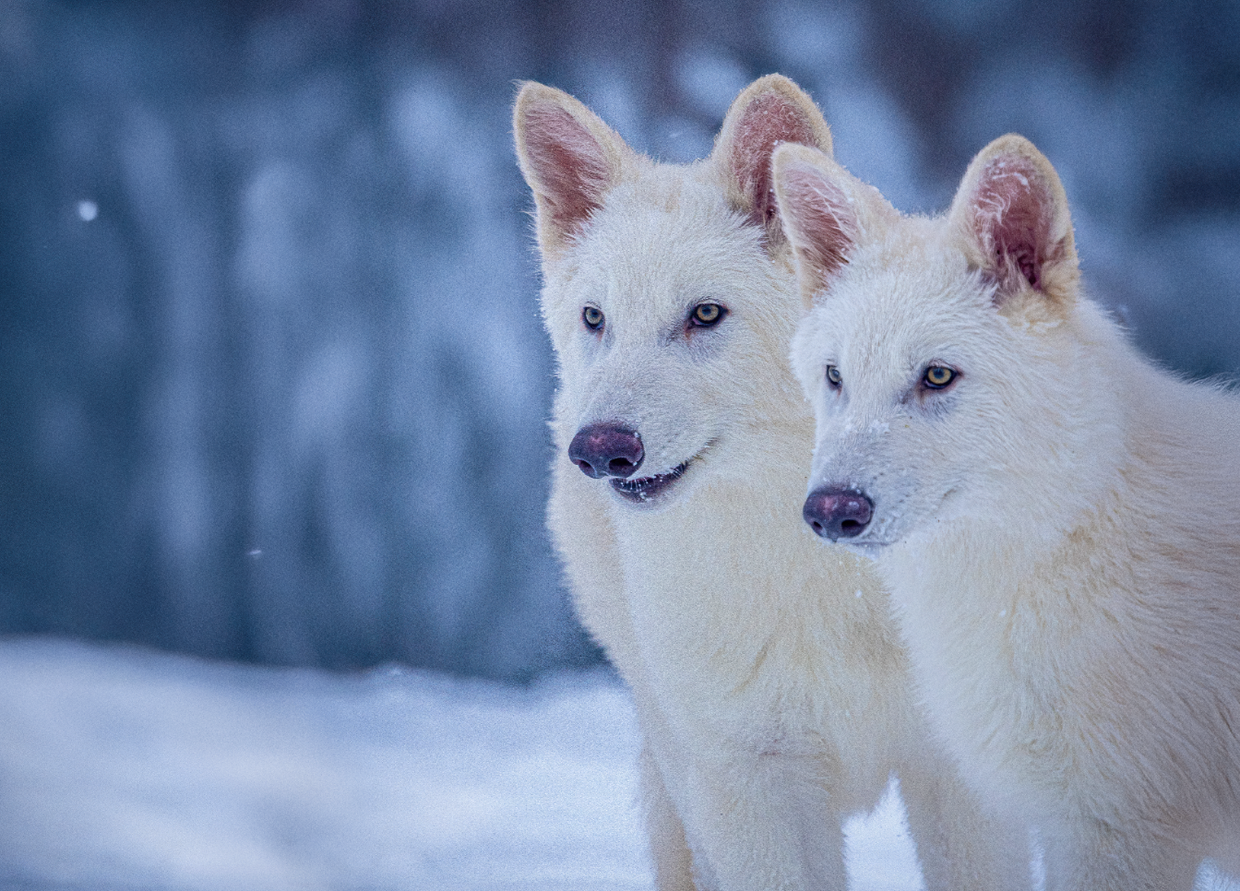
However, critics say the physical and genetic resemblance to an extinct species falls short of a full revival.
“All you can do now is make something look superficially like something else,” Vincent Lynch, a biologist at the University at Buffalo who was not involved in the research, told The AP.
“Whatever ecological function the dire wolf performed before it went extinct, it can’t perform those functions” in today’s environment, Lynch said.
The company says the animals are being cared for on a 2,000-acre preserve, “certified by the American Humane Society and registered with USDA,” enclosed by a 10-foot-tall fence and perimeter security.
Colossal was also able to create two litters of cloned red wolves, which are the most critically endangered wolf in the world.
The company says its de-extinction process could help support conservation efforts globally. “Preserving, expanding, and testing genetic diversity should be done well before important endangered animal species like the red wolf are lost,” said Harvard geneticist and co-founder of Colossal, Dr. George Church.
In 2021, Colossal announced plans to de-extinct the woolly mammoth — a concept Church had been developing for years. He told “60 Minutes” in 2019, “I would say that probably in five years we’ll know whether we can get this to work for mice, and maybe pigs and elephants. And then if we can get embryos to grow in the laboratory all the way to term, then it’s probably a decade.”
Last month, the company said its scientists have simultaneously edited seven genes in mice embryos to create mice with long, thick, woolly hair — dubbing its creation the “Colossal woolly mouse.”
While the results and images of the the shaggy-haired mice were posted online, Colossal did not publish its research in a peer-reviewed journal and it has not been vetted by independent scientists.
The scientists edited mouse genes related to their hair and fat metabolism — two qualities woolly mammoths needed to survive in their Arctic habitat. After confirming the gene modification process works in mice, they planned on testing it with elephants, which are woolly mammoth’s closest living relatives. But, since Asian elephants are endangered, the company will face a number of additional hurdles. It is also doing work aimed at protecting the world’s elephant populations.

