


If you can’t get enough cheese, you are not alone. In fact, it’s safe to say that the U.S. is a nation of cheese lovers. According to statistics, Americans consumed a whopping 5.3 billion pounds of cheese in 2021—that’s 1.8 billion more pounds than we collectively ate in 2010. It makes sense when you think about it: Melted on burgers, sprinkled on pizzas, stacked high on charcuterie boards—cheese is an integral ingredient in so many of our favorite foods. Its allure is undeniable. And although cheese can be a healthy part of a balanced diet, like everything, moderation is key, and eating too much of it can have adverse effects too.
For one thing, many varieties of cheese are riddled with calories and can be high in fat and sodium content, which research indicates can potentially lead to type 2 diabetes, heart failure, coronary heart disease, hypertension, and stroke, among other conditions. Because of its sodium and fat content, Dr. Akua Woolbright Ph.D., the national nutrition program director of Whole Foods’ nonprofit Whole Cities Foundation, recommends limiting your cheese intake to 1-ounce servings of hard cheese or half-cup servings of soft cheeses at a time.
“One way to do this is to purchase varieties with stronger flavors [like Parmesan, feta, and Swiss], so you can add more taste to your food with lesser amounts,” says Woolbright.
But, while the research connecting cheese consumption to chronic diseases may be somewhat inconsistent, if you’re predisposed to high blood pressure or have been officially diagnosed with hypertension, you may want to steer clear of these sharp, hard cheeses. “If you are interested in reducing your sodium intake, avoid feta and hard cheeses,” Woolbright advises, adding, “you can go a step further by replacing whole milk cheeses with low-fat and reduced-fat options.”
Read on to discover some of the health benefits and side effects of giving up cheese—and for more dietitian-approved healthy eating advice, be sure to check out the Surprising Side Effects of Giving Up Milk, Says Dietitian.
Your skin tone and texture may improve

Lowering your overall dairy intake—cheese included—may have a positive effect on the tone and texture of your skin. Research shows that dairy products are linked to excess oil production, which may increase the appearance of unsightly blemishes on your skin.
“Studies show that dairy can raise insulin levels, which increases the production of the hormones that produce sebum (an oily secretion), which may influence acne,” says Isabel Smith, MS, RD, CDN, founder of Isabel Smith Nutrition, in a previous interview with Eat This. “I don’t see this in all of my clients, but many find that more dairy consumption increases breakouts.”
You may experience less bloating
If you’re someone who struggles with digestive issues and experiences frequent bloating, then cutting out or limiting cheese and dairy may help reverse this. “For many, dairy can cause stomach upset and bloating due to either a lack of adequate enzymes to break down milk sugar or an actual allergy,” says Trista Best, MPH, RD, LD, at Balance One Supplements.
“Those [cheeses] lacking adequate amounts of lactase, the enzyme that digests milk sugar, are known to be lactose intolerant and experience excessive GI upset and bloating when consuming dairy,” Best adds.
If lactose-heavy cheeses tend to upset your stomach, consider opting for dairy-free cheese—and if dairy-free isn’t to your liking, consider trying these five kinds of cheese you can still eat if you’re lactose intolerant.
You may have fewer headaches & migraines

If you are someone who frequently gets migraines, a diet high in cheese and dairy may be the culprit. Some cheeses are high in tyramine, an amino acid that naturally occurs in plants and animal products and has historically been linked to the triggering of migraines and headaches.
Cheeses that are high in tyramine include aged cheddar, Swiss, Parmesan, blue cheeses (like Gorgonzola), and Camembert, according to the Mayo Clinic.
You may lower your cholesterol & heart disease risk
Another positive side effect of giving up cheese is that eating less of this dairy product can help you manage your cholesterol while decreasing your risk for other cardiovascular complications.
“Cheese is a food high in saturated fat, which is a contributor to heart disease primarily by increasing cholesterol levels,” explains Best. “Saturated fat has been shown to increase bad or low-density lipoprotein (LDL) cholesterol because it triggers the liver to produce more cholesterol.”
“High levels of LDL cholesterol leads to a buildup of fatty deposits in the arteries, a risk factor for heart disease and stroke,” she adds. “A positive side effect of removing cheese from your diet is the potential of lowering your cholesterol and subsequently your risk of heart disease.”
You may lose weight
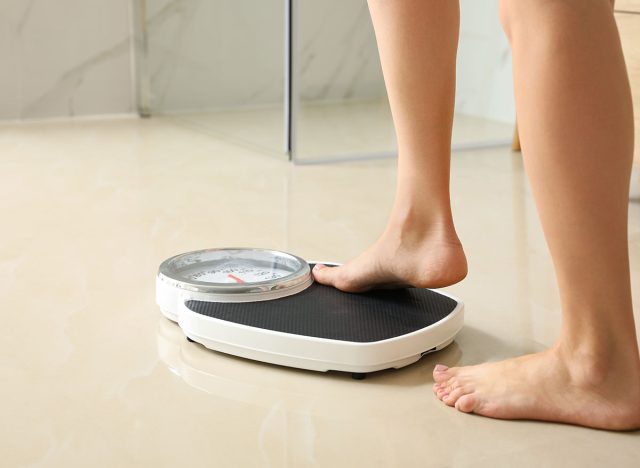
If you’re in the process of trying to lose weight, eating cheese to excess may also impede your ability to hit your weight loss goals based on your desired timeline because of the sugar, fat, and calorie content found in many kinds of cheese. That’s why cutting down on them can help aid weight loss.
For example, one measly ounce of cheddar cheese contains 120 calories and 30 milligrams of cholesterol. Additionally, it has 190 milligrams of sodium, which amounts to 8% of your Daily Value (DV), and 10 grams of fat, which is 15% of your DV.
if( navigator.sendBeacon ) { navigator.sendBeacon('https://www.google-analytics.com/collect', payload); } else { var xhr = new XMLHttpRequest(); xhr.open('POST', 'https://www.google-analytics.com/collect', true); xhr.setRequestHeader('Content-Type', 'text/plain;charset=UTF-8'); xhr.send(payload); } } ); }
Watching your weight might give you the motivation to give up cheese for a while. However, there’s no shame in still not wanting to let your love of this dairy delight go for good. When tweaking your diet to support the effectiveness of your weight loss journey, just be mindful of your portions. It may also help to opt for low-fat or fat-free cheeses instead.
You may lower your cancer risk
Reducing your consumption of cheese, and dairy in general, may help lower your risk of cancer. This is because by eating less cheese you are ingesting less casein, a protein found in milk that may be linked to illness.
“Casein has been shown to increase tumor-growth rates for certain types of tumors, such as prostate cancer and potentially breast cancer,” says Dana Ellis Hunnes, Ph.D., MPH, RD, a senior dietitian at UCLA medical center, an assistant professor at UCLA Fielding School of Public Health, and author of the book Recipe for Survival: What You Can Do to Live a Healthier and More Environmentally Friendly Life. “When we eat a lot of cheese, which is primarily made with the casein fraction, we potentially increase that risk.”
You may reduce inflammation in your body
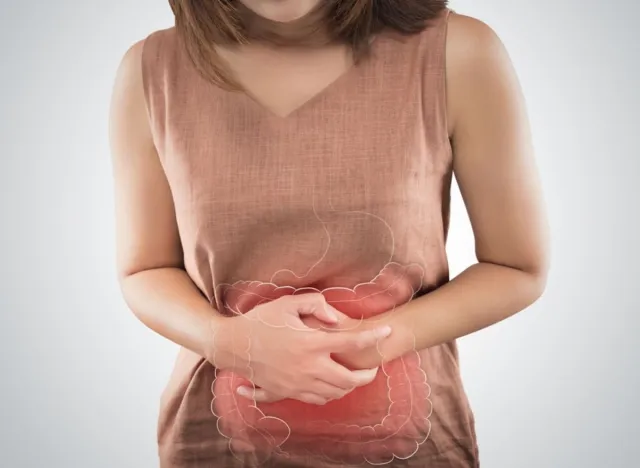
Bess Berger, RDN, CDN, and owner of Nutrition by Bess, notes that cheese and dairy contain a lot of additives, preservatives, and hormones, which may cause inflammation in the body.
“As a PCOS dietitian, I see women take out dairy and they report headaches and other inflammatory responses calm down,” Berger says. “Unfortunately, the quality of dairy products today is considerably less and more modified than it was even twenty years ago—this affects a lot of us and I see this with women all the time.”
If you don’t want to cut out cheese entirely, Hunnes recommends choosing ones with fewer additives. “Less-processed cheeses are somewhat healthier than others,” suggests Hunnes. “If you are going to eat cheese, I recommend one with the fewest number of ingredients possible, and as possible, from a humane-raised farm.”
You may live a more eco-friendly lifestyle
Giving up cheese isn’t just beneficial for your health—it can also be beneficial for the planet.
“It requires a lot of water to produce milk in general,” Hunnes points out. She shares that it takes three times as much water to produce dairy milk as opposed to the average plant-based milk.
“From an environmental perspective, cheese is very resource-intensive,” says Hunnes. “It requires a lot of land to produce enough milk to make a pound of cheese, it requires thousands of gallons of water to produce a pound of cheese, and it emits a lot of methane from the cows themselves.”
A previous version of this story was originally published in May 2022. It has since been updated to include additional copy and proofreading revisions, additional research, and updated contextual links.

