Lower back pain is a common ailment that affects millions of people worldwide. Whether it’s due to poor posture, sedentary lifestyle, or incorrect lifting techniques, strengthening the lower back is essential for overall spine health and preventing injuries.
Here are three of the best exercises designed to strengthen the lower back, improve flexibility, and support a healthy posture.
1. Bridges
Bridges target the lower back, glutes, and hamstrings, making them an excellent exercise for strengthening the posterior chain.
How to Perform:
Lie on your back with your knees bent and feet flat on the floor, hip-width apart.
Press your feet into the floor and lift your hips towards the ceiling, creating a straight line from your shoulders to your knees.
Hold the position at the top for a few seconds before slowly lowering your hips back to the starting position.
Perform 2-3 sets of 10-15 repetitions.
Benefits: Bridges not only strengthen the lower back but also improve core stability and support spinal alignment.
2. Bird-Dog
The Bird-Dog exercise improves balance, stabilizes the core, and strengthens the lower back and abdominal muscles.
How to Perform:
Start on your hands and knees, with your wrists under your shoulders and your knees under your hips.
Extend one arm forward and the opposite leg back, keeping both your arm and leg parallel to the floor.
Hold the position for a few seconds, focusing on stability and maintaining a straight line from your extended hand to your extended foot.
Return to the starting position and repeat on the other side.
Perform 2-3 sets of 10-12 repetitions on each side.
5 Excellent Exercises to Promote Fat Loss
19 Foods That Help You Burn Fat Faster
14 Tricks On How To Lose Belly Fat Effortlessly
Benefits: This exercise enhances coordination and balance while strengthening the core and lower back muscles, essential for reducing the risk of lower back pain.
3. Supermans
Supermans are a straightforward and effective way to target the lower back, glutes, and hamstrings.
How to Perform:
- Lie face down on the floor with your arms extended in front of you and legs straight.
- Simultaneously lift your arms, chest, and legs off the floor, engaging your lower back and glutes.
- Hold the lifted position for a few seconds, then slowly lower back down to the starting position.
- Perform 2-3 sets of 10-15 repetitions.
Benefits: Supermans help to strengthen the entire back and improve posture. They also activate the gluteal muscles, contributing to a stronger lower back and a reduced risk of injury.
Incorporating these exercises into your fitness routine can significantly improve lower back strength, flexibility, and stability.
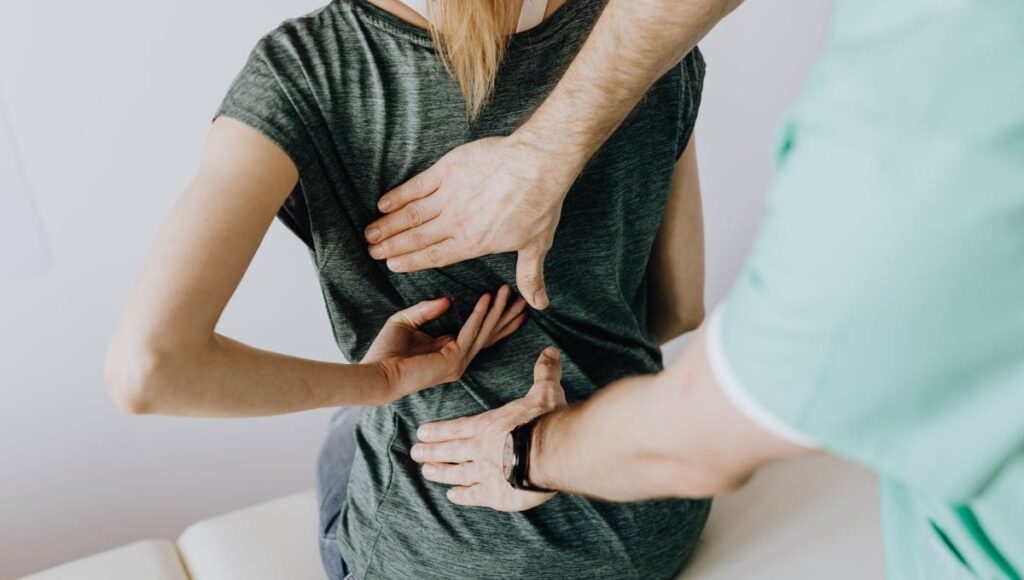 Source: Karolina Grabowska on Pexels
Always ensure proper form to maximize benefits and minimize the risk of injury. If you’re new to exercise or have existing back issues, it’s advisable to consult with a healthcare professional or a certified fitness trainer to tailor the exercises to your specific needs. Strengthening your lower back is not only crucial for athletes but for anyone looking to maintain a healthy, active lifestyle.
What are the Muscles of the Back?
The back is a complex structure composed of several muscles that work together to support the spine, enable movement, and maintain posture. These muscles are broadly categorized into three groups based on their location and function: superficial, intermediate, and deep muscle layers.
Superficial Muscles (Extrinsic Muscles)
These muscles are primarily involved in the movement of the upper limbs and the shoulder girdle. They include:
- Trapezius: This large, trapezoid-shaped muscle extends from the occipital bone of the skull down to the lower thoracic vertebrae and out to the scapula. It helps in moving the scapulae and supports the arm.
- Latissimus Dorsi: Known as the “lats,” this broad muscle starts from the lower back and stretches to the sides of the back. It is involved in the movement of the shoulders and arms, including adduction, medial rotation, and extension.
- Rhomboids (Major and Minor): Located between the spine and the scapula, these muscles retract and stabilize the scapula.
- Levator Scapulae: This muscle elevates the scapula and assists in bending the neck to the side.
Intermediate Muscles (Respiratory Muscles)
These muscles assist with the process of respiration:
- Serratus Posterior Superior: It elevates the ribs during deep inhalation.
- Serratus Posterior Inferior: This muscle depresses the ribs, aiding in forced exhalation.
Deep Muscles (Intrinsic Muscles)
These muscles are primarily responsible for the movement and stabilization of the spine. They are further divided into several layers:
- Erector Spinae (Iliocostalis, Longissimus, Spinalis): A group of muscles and tendons which run more or less vertically along the spine from the sacrum to the base of the skull. They are responsible for extending and rotating the spine.
- Transversospinalis Group (Semispinalis, Multifidus, Rotatores): These muscles are located under the erector spinae and are crucial for stabilizing the vertebrae and assisting in spinal rotation and extension.
- Intertransversarii and Interspinales: These small muscles are located between the transverse and spinous processes of the vertebrae, respectively, and aid in spinal stabilization and extension.
- Quadratus Lumborum: It is located in the lower back on either side of the lumbar spine. It helps in flexing the spine laterally and stabilizing the lower back and pelvis.
Each of these muscle groups plays a vital role in the functioning of the back, from providing structural support to the spine to facilitating movement and flexibility.
Proper exercise and care of these muscles are essential for maintaining a healthy back and preventing pain or injury.