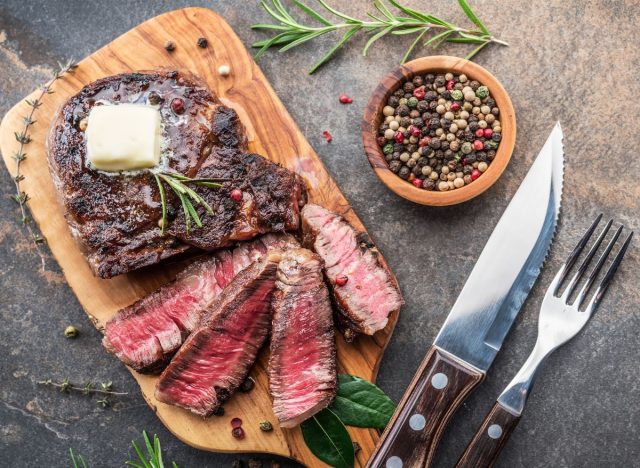
Nothing quite hits the senses like the sight, smell, taste, and even the sound of cooking a delicious, juicy steak. For hardcore red meat lovers, it can evoke a sense of mouthwatering nostalgia that takes you back to a time or place where you were likely celebrating some special occasion while chowing down on steak so tender, it cuts smooth like butter. Perhaps when time and your budget allows, you may even want to replicate this past perfect meal, recreating your favorite steak dinner in the kitchen at home. But after selecting the perfect cut of steak and gathering your other ingredients and accoutrements, there’s nothing worse than realizing your at-home steak dinner falls short because the meat is tough like an old rubber shoe.
When it comes to preparing a top-notch steak, texture—how it feels as you bite into it and chew it—is crucial. Whether you picked up a high-quality steak tenderloin or a budget-friendly flank, everyone wants a tenderized steak, but it’s still all too easy to wind up with chewy, fibrous, fatty bites that are a brutal workout for your jaw. So, are there ways that home chefs can effectively pull off tenderizing a steak with little muss or fuss?
To learn more about the best ways to tenderize steak, we spoke to professional chefs and culinary experts from all walks of life. Read on to find out more about some of the best techniques to help you tenderize your steak—and for more tips to help you recreate the steak dinner of your dreams, be sure to check out The Best & Worst Cuts of Steak—Ranked!
Prep Techniques To Tenderize Your Steak
Shutterstock
1. Choose the right cut.
“Some cuts of meat are naturally more tender than others,” Chef Dennis Littley, a classically trained chef with 40+ years of experience, tells Eat This, Not That! “Look for cuts labeled “tender” or “choice” to ensure you’re starting with a good base. For example, a fillet is more tender than a ribeye.”
“Use an acidic ingredient like vinegar, citrus juice, or wine to soften the connective tissue in the meat,” says Lori Walker, RD, recipe developer, and owner of Easy Kitchen Guide.
“When marinating steak, there needs to be an acid component to tenderize the steak and break down the muscle fibers of the meat,” says Tony Sudak, an experienced chef de cuisine who currently serves as an apprentice butcher for Walden Local Meat Co. “Now, different cuts take longer to marinate and break down than others. For example, marinate a London broil to tenderize it; ideally, it should marinate overnight to work those tough muscle fibers and make them more tender. On the other hand, if you want to marinate a ribeye, that cut already being on the tender side shouldn’t take nearly as long. “
Executive Chef Bin Lu of The Restaurant at Blue Rock in Washington, VA, echoes that advice: “Marinating the meat can be effective before grilling, especially if you have something acidic in the marinade. Those can be done overnight—but if you’re using something like papaya or mango, be sure to only marinate it the day of.”
No matter what ingredients are used, it’s important that you allow enough time for the marinade to evenly coat and absorb into your meat without setting too long, as this could result in overly tender, mushy meat.
“For best results, you should marinate for at least four hours but no longer than 24 hours,” says Walker.
“Pro tip: Turn your steak a few times while marinating to promote even coating,” adds Alex Reitz, a chef and recipe developer at Beef, It’s What’s For Dinner.
The Absolute Best Way to Marinate Steak, According to a Chef
3. Use an acidic rub.
“An acidic rub is another great way to tenderize steak at home without marinating time,” says Walker. “Mix together equal parts oil, vinegar, lemon juice, and seasonings (like garlic powder or chili powder). Rub the mixture all over the steak and leave to stand for at least 15 minutes before cooking.”
4. Salt your steak.
Shutterstock
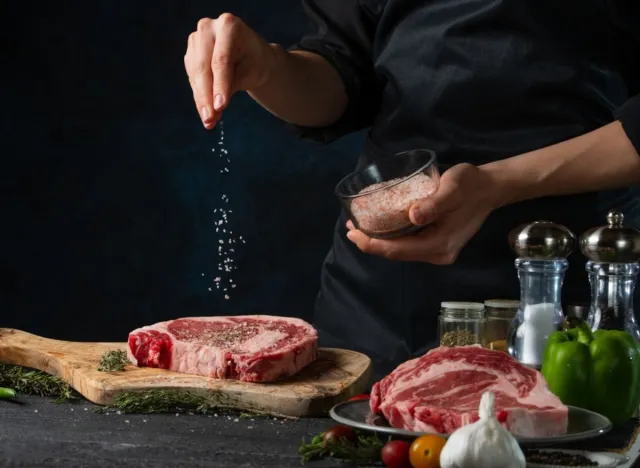
“Salting the steak before cooking draws out moisture and breaks down the proteins, tenderizing the meat,” says Chef Dennis. “Sprinkle kosher salt or sea salt over both sides of the steak and let it sit at room temperature for about an hour before cooking.”
“I always salt my steak really well and let it sit overnight—this is my favorite way of tenderizing it,” explains Diana Manalang, chef and owner of Little Chef Little Café in New York City. “It pulls the moisture out of the steak, and once the salt dissolves, it acts as a dry brine for the steak, just like a dry brine for the turkey.”
Another steak tenderizing technique Walker suggests is making a salt crust, which involves “covering your steak with salt and baking it, [as this] can also help to break down tough fibers in the meat while adding flavor at the same time.”
“Place your steak on a wire rack inside of a baking dish filled with coarse salt and bake at 350°F (180°C) for 40 minutes,” Walker advises, when opting for a salt crust to tenderize your steak.
5. Use an enzyme.
“Store-bought enzyme products like bromelain or papain can help to tenderize steak without adding any additional flavor,” advises Walker. “Simply mix the enzyme with water, rub it onto the steak, and let sit for 30 minutes before cooking.”
Enzymes that are known to help break down tough proteins (like bromelain, papain, and protease) also occur naturally in fruits like pineapple, papaya, and mangoes. “The enzyme papain contained in papaya can help break down proteins in the steak and make it more tender,” explains Walker.
“Mangoes can be especially effective because they have enzymes that will break down meat,” adds Chef Lu.
So if you love bright flavors and tenderized steak, but are having trouble tracking down specific enzyme-based cooking products in stores, you can always go the au naturale route by pureeing these fruits into a sweet yet tart marinade.
“Puree fresh papaya until you have a paste, spread it over the steak, wrap it tightly in plastic wrap and leave for one hour before cooking,” Walker suggests.
6. Soak steak in cold water.
“Soaking your steak in cold water for an hour or two can help to break down tough fibers in the meat, resulting in a more tender texture,” says Walker. “Make sure that you change the water every 30 minutes to avoid any bacteria from forming on the steak.”
7. Pound your steak.
Shutterstock
“The go-to way we tenderize steaks at the butcher shop is to use a tool called a Jaccard,” explains Sudak. “This tool is formatted with three rows of blades that, when pushed down, pierce the meat and cut up the muscle fibers to make them more tender,” says Sudak. “The downside to this is that you create more surface area and, in turn, cause more oxygen to get to the meat causing it to oxidize faster.”
“While I prefer to tenderize through flavor, you can use the physical method if you are short on time,” says Sudak. “In a pinch, for a quickly tenderized steak, totally use the mechanical tenderizers to make quick work of a tougher steak. (And ideally, the more flavor you can impart into a steak the better!)”
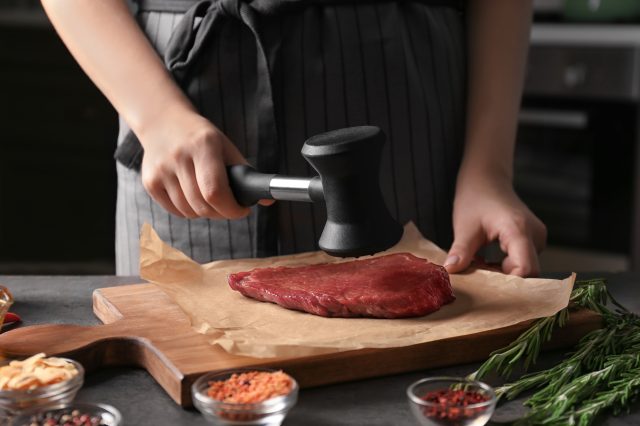
“You don’t need any special equipment to tenderize steak,” explains Walker. “Simply use a kitchen mallet or other blunt object to hammer the steak.”
“Place the steak on a cutting board, cover it with plastic wrap, and pound it with a meat mallet to break down the fibers and make it more tender,” adds Chef Dennis.
“Be sure to cover the steak with plastic wrap before pounding it, and try not to pound too hard or you may end up with pieces of tough meat,” Walker advises.
8. Score your steak.
“If you want to get creative, try scoring your steak with a knife by making shallow cuts in the meat,” suggests Walker. “This will allow marinades or rubs to penetrate deeper into the steak and help speed up the tenderizing process.”
“Be sure not to cut too deep, or it could cause your steak to tear when cooking,” she also warns.
9. Wait until the steak is at room temperature before cooking.
“One of the easiest ways to cook a tender steak is to let it get to room temperature before cooking,” explains chef and culinary nutrition expert Melissa Eboli. “Meaning, let it sit on your counter for 30-60 minutes to get the chill out. The reason being that when you put an ice-cold steak on a hot surface, it will tense up and result in tough meat. When the steak is thawed out, it will not be as extreme when you transfer it to the hot surface, leaving it to be more tender.”
Tips for Tenderizing While Cooking
Shutterstock
10. Cook steak slowly and use low heat.
Whether using a stovetop, grill, or even a pressure cooker, slow-cooking your steak helps to elevate and enhance the flavor of your meat, while also making even the toughest cuts of steak a more juicy, tender, and tasty texture.
“Cook it low and slow,” advises Walker. “When possible, opt for low-temperature cooking methods, such as braising, slow roasting, or stewing. These techniques slowly break down the connective tissue in tougher cuts of meat, resulting in a more tender steak.”
According to Manalang, this approach is especially helpful when dealing with very tough cuts of meat because they “then come out like butter when done correctly.”
11. Flip conservatively & don’t overdo it.
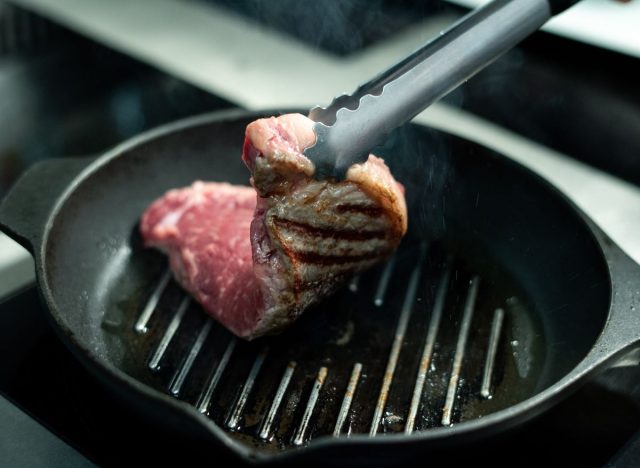
“Don’t flip your steak too much!” warns Reitz. “One flip is usually all you need, but make sure to look out for charring or burning and turn down the heat if necessary. This will help keep your steak juicy and tender throughout the cooking process!”
12. Use the oven.
“If you’re short on time, try using your oven to tenderize steak,” suggests Walker. “Place the steak on a wire rack inside of a baking dish and bake at 350°F (180°C) for 40 minutes. This will help to soften the tough fibers in the meat without overcooking it.”
When Your Steak Is Done
Shutterstock
13. Let it rest.
“No matter which method you choose, remember to give your steak time to rest after cooking,” says Walker. “This will help the juices reabsorb into the steak and make it even more tender.”
“Once your steak is off the grill, let it rest for about five minutes to prevent the tasty juices from draining onto your plate,” adds Reitz. “The juice helps keep it tender, so you want to make sure it absorbs into the steak!”
14. Cut steak on a bias.
After allowing your steak to rest, it’s time to plate! Cutting steak on a bias (meaning, with the knife at an angle in relation to the cutting board) is known to yield a juicer, more tender steak. But what does this process really entail?
“When slicing your steak, cut across the grain, or perpendicular to the direction of the fibers, to maximize tenderness,” explains Reitz.
“Also, avoid piercing your beef with a fork at any time while carving to prevent additional drainage. Try using tongs to hold it instead while slicing to preserve the juicy goodness!”