


You can’t go wrong with eating veggies, especially when you know that the ones you are munching on are considered to be the best vegetables for weight loss. According to the Harvard School of Public Health, a diet that contains plenty of vegetables regularly can help you prevent heart disease, manage blood pressure and blood sugar levels, and even improve your digestive health. Along with these health benefits, vegetables have been scientifically linked to driving effective weight loss. For instance, one study in the European Journal of Clinical Nutrition found that increasing your consumption of vegetables could contribute to increased weight loss.
While almost all vegetables can help support your overall health, you might be surprised to know that the best veggies for weight loss have certain qualities that can help make this possible. Naturally low in calories and high in fiber and water content, many veggies can be satiating enough to replace more calorie-heavy snacks. In addition, the fiber within vegetables can further aid your weight loss efforts by improving digestion, promoting a healthier gut, and helping to manage blood sugar responses. Some vegetables even contain specific antioxidants that are known to help promote weight loss, as well.
To learn more, we asked a few expert dietitians to give their takes on which vegetables are best to eat for weight loss. Keep reading to find out what they suggest—and for more healthy eating tips to help you have a healthy gut, check out the 19 Best Gut-Healthy Foods.
Carrots
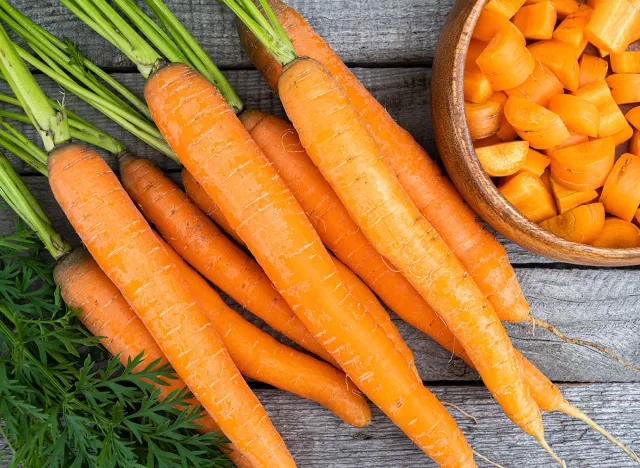
Perhaps most commonly discussed concerning your eye health, carrots are full of helpful vitamins and nutrients that can also benefit your weight loss efforts. For one, this orange vegetable contains a good dose of fiber at over 3.5 grams per cup. And as a lower-calorie food, carrots can help keep you full while also lowering your calorie intake, according to the British Journal of Nutrition. The Journal of Food Science and Technology also adds that carrots can help promote healthy digestion, maintaining healthy functioning of your digestive tract, and keeping things regular can also help with weight loss efforts. On top of these benefits mentioned above, you’ll also notice that carrots contain about 6 grams of sugar—natural sugars, that is—per cup. This vegetable’s natural hint of sweetness can help you add some mild, sweet flavor to your dishes without having to add extra sugar, which in turn can help you keep your sugar calories low.
Peas
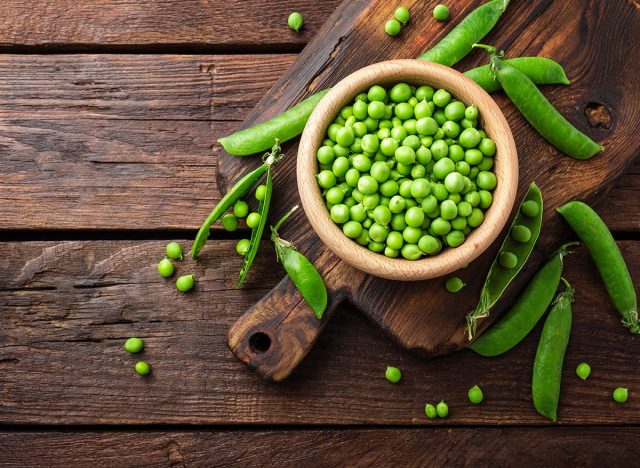
Peas often get overlooked because they’re small and sometimes act only as a filler vegetable, but once you learn the nutritional value of this veggie, you may think twice about skipping over them. For starters, just a cup of peas contains over 8 grams of fiber, making them one of the highest-fiber vegetables out there. Not only that, but peas also have one of the highest protein counts among vegetables, with almost 8 grams per cup. There is tons of research out there that proves the importance of protein in your diet when you want to lose weight. This is because protein can increase satiety, regulate hunger hormones, and is associated with less abdominal fat.
Sweet potato
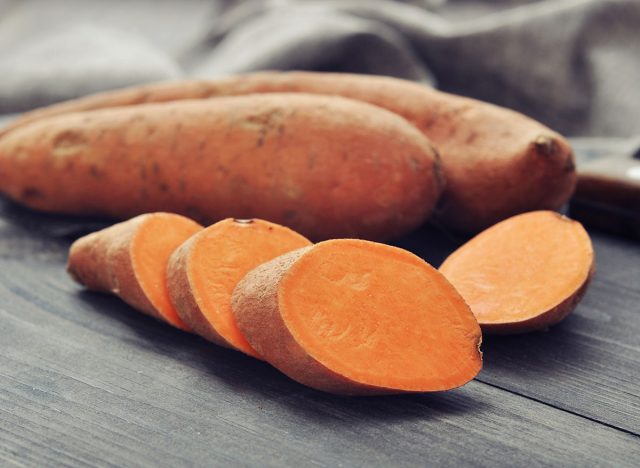
For a vegetable that combines both protein and fiber, sweet potatoes are an excellent choice. Sure, they are higher in carbohydrates and natural sugars than many other vegetables. Still, unless you’re specifically instructed to avoid carbohydrates for a health concern, this veggie may be able to aid in your weight loss efforts. Because sweet potatoes are higher in fiber, they can help keep you full longer without taking up too many calories. This vegetable contains a type of fiber, specifically called viscous fiber, which is known to slow down digestion by creating a gelatinous substance in your digestive tract. The result of this is an increased feeling of satiety. Another helpful quality about sweet potatoes is the fact that similar to carrots, they contain natural sugars, which puts them on the sweeter side. This means they’re delicious to eat on their own or can be added into recipes as a natural sweetness without packing in added sugars.
Cauliflower
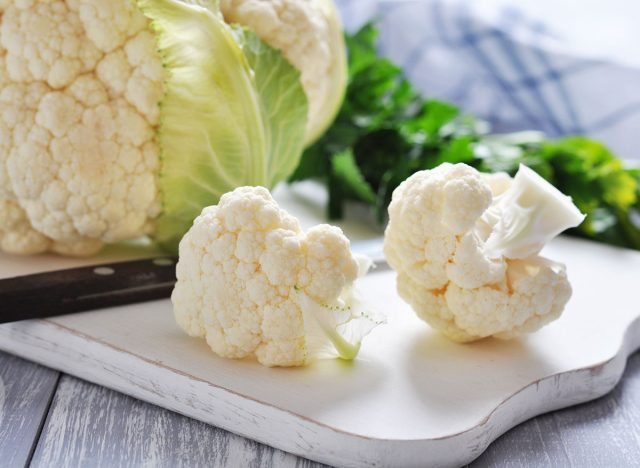
A member of the brassica family along with broccoli and brussels sprouts, cauliflower is low in calories and contains some fiber. According to Lisa Young, PhD, RDN, author of Finally Full, Finally Slim and a member of our Medical Expert Board, this is “a winning combination for weight loss.” Young also points out that cauliflower is so versatile that it’s easy to incorporate into many different types of dishes. “For example, you can add cauliflower rice to stews or enjoy steamed cauliflower as a side dish,” she says.
Spaghetti squash
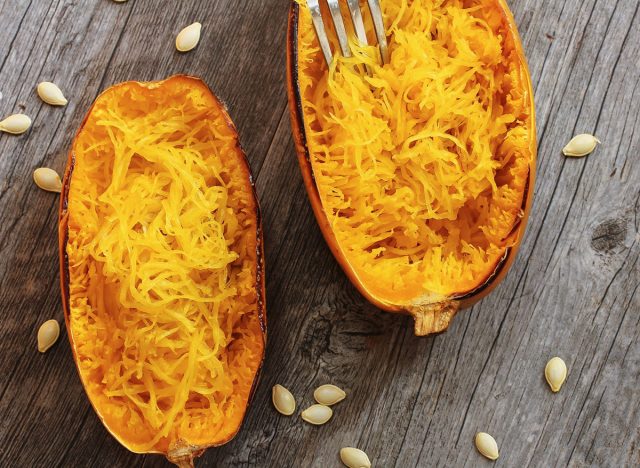
Spaghetti squash is a great vegetable for weight loss because it can act as a healthy substitute for traditional pasta.
“For people with diabetes or those needing to watch their carb intake, it’s a great low-carb alternative that won’t spike blood sugar levels,” says Young. Even if you do not need to monitor your intake of carbohydrates, according to Young, this vegetable is still “low in calories and provides some fiber—making it a weight loss-friendly food.”
Broccoli
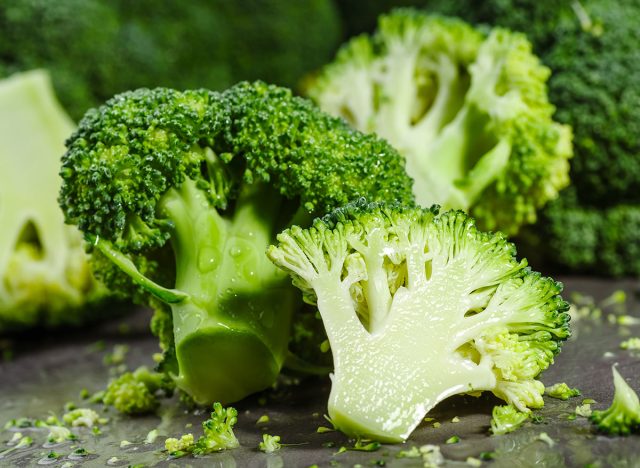
Broccoli is a versatile vegetable that people love eating—whether raw, steamed, or sautéed. Along with versatility, this veggie is also a great addition to your eating plan when you’re trying to shed a few pounds.
“Broccoli contains antioxidants, which are known to lower the inflammation in the body, among other things. These nutrients in broccoli are unique in how they work,” says Trista Best, MPH, RD, LD, a consultant at Balance One Supplements. Research shows that chronic inflammation can cause weight gain. However, the ability to reduce inflammation can help you lose weight.
“This vegetable also provides the body with sulforaphane, an antioxidant plant compound that gives this vegetable most of its anti-inflammatory benefits,” Best adds. “Sulforaphane works by lowering cytokines and NF-kB, the substances that drive the inflammation process. When these are abundant in the body and allowed to persist, dangerous levels of inflammation can be reached.”
Bell peppers
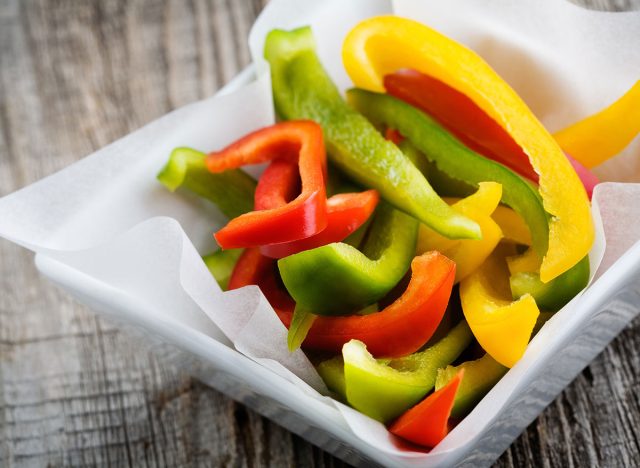
Bell peppers are a delicious vegetable with a mild flavor, so they’re great for adding to different types of dishes.
“Bell peppers are ideal vegetables to add to a weight-loss diet. They are low in calories and high in nutrients while also helping to create a sense of fullness after meals. This combination can help to prevent overeating throughout the rest of the day,” Best says.
In addition to supporting weight loss, Best notes that “Bell peppers are also packed full of nutrients that benefit the body in significant ways, yet most of the general public is unaware of how healthy they actually are.”
Yellow bell peppers, in particular, are higher in vitamin C than oranges, which is an important nutrient for immune support benefits and also improves the absorption of iron.
Alliums
if( navigator.sendBeacon ) { navigator.sendBeacon('https://www.google-analytics.com/collect', payload); } else { var xhr = new XMLHttpRequest(); xhr.open('POST', 'https://www.google-analytics.com/collect', true); xhr.setRequestHeader('Content-Type', 'text/plain;charset=UTF-8'); xhr.send(payload); } } ); }
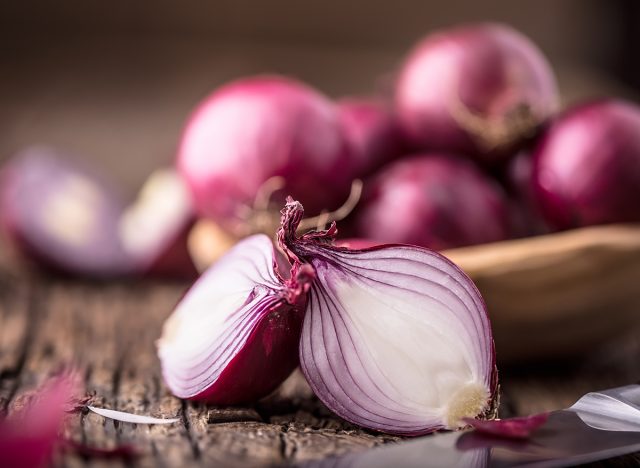
Veggies like onions, garlic, scallions, shallots, leeks, and chives are considered alliums. Packed with flavor, they can compensate for other higher-calorie flavor additives you may incorporate, making them a great addition to a healthy meal plan.
“These low-calorie, high-flavor vegetables can be used in so many ways, from soups to sauces, seasonings, and salads, and more,” explains Jonathan Isbill, MS, RD, LD, a registered dietitian, holistic health coach, and educator. “One of the easiest ways to reduce total calories is to go for a whole-foods flavor and swap out ultra-processed dressings and sauces, soups, and other packaged foods that may provide you with familiar flavors but come with very little nutrients and lots of extra empty calories.”
“Onions are also a great source of whole food prebiotics to support a healthy microbiome balance and happy digestion,” Isbill notes.
Hot peppers
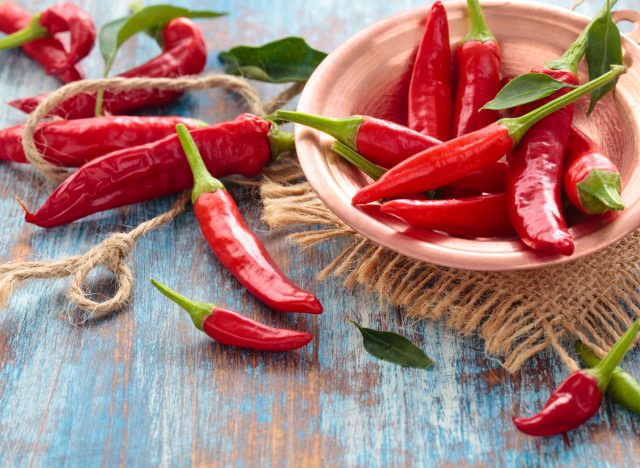
If you’re someone who can handle a little bit of spice in the kitchen, you may want to try adding some hot peppers to your next meal to support weight loss.
“I love adding hot peppers and chili peppers to someone’s meal plan to boost flavor and heat to their dishes,” says Isbill. “The interesting thing about veggies that come from the capsicum genus of plants is that they contain capsaicin, which has been known to boost mood and metabolism and reduce inflammation while also promoting an endorphin release and giving some people an extra calorie burn. Capsaicin can heat up the body’s temperature and cause you to burn off a few extra calories thanks to this thermic effect of these foods.”
Beets
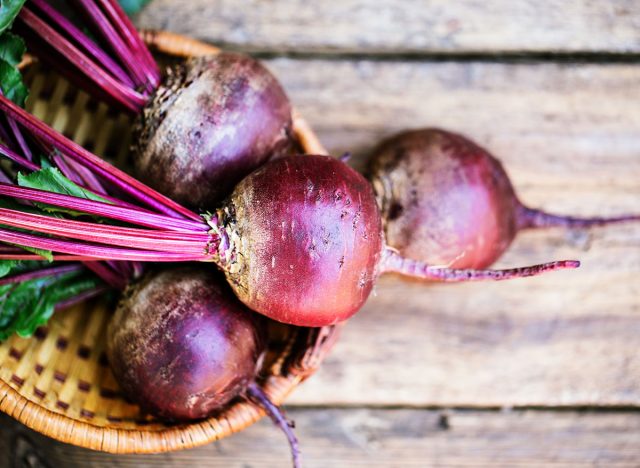
If you love beets, you’ll be happy to know that they are packed with plenty of helpful nutrients to aid in weight loss.
“Being rich in nitrates, beets have been long appreciated by athletes and high performers as a way to increase nitric oxide in the body. This extra boost of NO can help fuel workouts, support blood flow, maximize recovery, and may even boost performance for some,” says Isbill.
When you get more out of your fat-burning workouts, you can support your weight loss goals.
“Many people enjoy beetroot juice. And you can also sauté their greens in stir-fry, add them to a salad, or blend them in a smoothie,” he adds.
A previous version of this story was published in November 2022. It has been updated with additional entries, nutritional information, proofreading revisions, and updated contextual links.


